What Makes a Kanchipuram Silk Saree Different
A Kanchipuram saree is defined by where and how it is made. It is not defined by a design that can be copied anywhere. The weave comes from Kanchipuram in Tamil Nadu, and “Kancheepuram Silk” is a registered Geographical Indication (GI) under India’s GI Act. That means only sarees woven in the notified region using the traditional method can legally carry the name.
Three things set a genuine Kanchipuram silk saree apart from other silk sarees. First, the silk itself is thick, multi-ply mulberry yarn, which gives the fabric its weight, body and deep lustre. Second, the zari is woven in, not printed or embroidered on. Third, the borders are usually made with the korvai technique, where a contrast border is interlocked with the body during weaving. That is why a maroon body can carry a mustard border with no visible seam.
In Tamil, pattu simply means silk. So a Kanchipuram pattu saree, a Kanchi pattu saree and a Kanjivaram saree all describe the same weave. The names differ only by language and region.
The 4-Point Kanchi Check: How to Spot an Original Kanchipuram Silk Saree
Most buying advice tells you to “rub the zari” or “burn a thread”. Neither is practical when you are buying a ₹30,000 saree, and neither proves much on its own. We use a four-point check instead. You can run it in-store or on any product page.
- Mark. Look for the Silk Mark label, issued by the Silk Mark Organisation of India under the Central Silk Board. It certifies that the fabric is pure silk. [Confirm which pieces carry Silk Mark tags before publishing.]
- Korvai. Turn the saree over at the border. In a genuine korvai weave, the border and body colours meet in an interlocked, zig-zag join on the reverse, not along a stitched line.
- Zari. Ask whether the zari is pure or tested. Pure zari is silver thread coated with gold. Tested zari uses a copper or polyester core and costs far less. Both are legitimate, but the price should match.
- Weight. A bridal Kanchipuram silk saree with a grand border typically feels heavy in the hand. A very light saree with a “heavy” border usually means the border is printed, embroidered or made with a synthetic zari.
On every Diadem product page, the fabric line (“Pure Kanchipuram Silk”) and the border description (“Contrast Korvai Zari Border”, “Retta Petta Zari Border”) are written out in full. This lets you run points 2 and 4 before you visit.
Kanchipuram Silk Sarees for Every Occasion
Not every Kanchipuram pattu saree is a bridal saree. Choosing the right weight for the event matters more than most people expect.
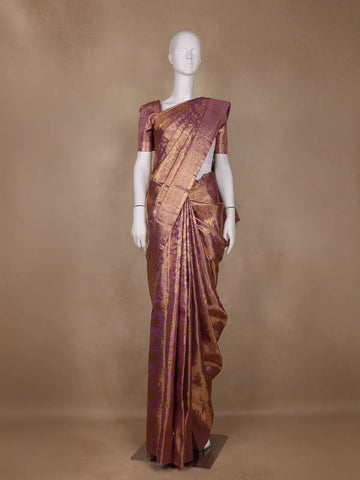
Wedding muhurtham: For the main ceremony, look for a grand gold zari border, a contrast pallu and rich jewel tones such as maroon, mustard and navy. Pieces like the Antique Copper Maroon saree with a grand gold zari border or the Mustard Yellow Kalamkari saree with a navy grand border are made for this moment. For more ceremony-ready weaves, explore our bridal Kanchipuram sarees and wedding sarees.
Engagement: A medium border with softer contrast colours keeps the look elegant without competing with the wedding saree. The Dusty Mauve Purple Floral Vine saree with a contrast zari border is a good example. You’ll find more options in our engagement sarees collection.
Pre-wedding and family functions: Choose a medium border with a floral vine or butta body, which looks festive but is easier to wear for long hours. The Royal Navy Blue Floral Vine saree with an elephant motif border suits these occasions well.
Festivals: For Pongal, Deepavali and Navaratri, a lighter body with checks, stripes or vaira oosi kattam patterns works best. The Peacock Blue Vaira Oosi Kattam saree with a korvai border is a classic festive choice. Browse more in our traditional sarees collection.
Temple visits and poojas: Subtle zari, butta work and traditional colours feel right for temple visits and religious ceremonies. The Deep Emerald Green Butta saree with a floral zari border is an understated option.
Half-saree ceremonies: For a daughter’s half-saree function, our Kanchipuram silk dhavani sets in lime green and vibrant orange combine traditional weaving with a designer blouse and dupatta.
Traditional Motifs and What They Mean
Kanchipuram silk sarees borrow heavily from temple architecture and the natural world. You will see a few motifs again and again across our collection.
The mayil (peacock) and annapakshi (swan) borders are bridal favourites. Vaira oosi (“diamond needle”) is a fine dotted pattern often set inside kattam (checks). Butta refers to small woven motifs scattered across the body. Retta pettu (“double border”) means matching borders on both edges of the saree.
Floral vine and paisley bodies are popular with modern brides who want a lighter, less traditional look. They still keep the korvai construction and zari border underneath.
Colours and Contrast in Kanchi Pattu Sarees
Contrast is a signature of the Kanchipuram saree. Classic bridal combinations include maroon with antique gold (red sarees for the muhurtham), mustard with navy, and green with magenta. They hold their colour well in daylight muhurtham photography.
For receptions and second-day functions, brides increasingly choose softer bodies such as aqua mint, dusty mauve, soft beige and baby pink, paired with a contrast zari border. Our reception silk sarees collection covers that look in detail. If you are building a trousseau, a practical approach is one traditional contrast saree for the main ceremony and one lighter colour for the other events.
Kanchipuram Silk Saree Price: What You Are Paying For
The price of a Kanchipuram silk saree depends on four things: how much zari is used, whether the zari is pure or tested, how wide and complex the border is, and how long the saree took to weave.
At Diadem, festive Kanchipuram sarees with butta or checked bodies start at around ₹8,250, and you can browse more options in sarees under ₹10k. Bridal pieces with grand gold borders and woven Kalamkari designs go above ₹80,000. If a “pure Kanchipuram silk” saree with a grand border is priced far below the market, run the 4-Point Kanchi Check before you buy.
If a Kanchipuram pattu saree feels too heavy for all-day wear, soft silk sarees give a similar lustre at a fraction of the weight.
Caring for Your Kanchipuram Silk Saree
A Kanchipuram silk saree can last decades with simple care. Dry-clean only with a silk specialist. Wrap the saree in soft muslin or cotton, never plastic, which traps moisture and dulls the zari. Refold it every few months along different lines so the zari doesn’t crack at the creases.
Keep it out of direct sunlight, since bright colours fade fastest along the fold edges. Avoid spraying perfume directly onto the zari.
Shop Kanchipuram Silk Sarees at Diadem
You can shop our full Kanchipuram silk saree collection online, or see the korvai and zari in person at our T. Nagar and Nungambakkam boutiques. Still comparing weaves? Explore Banarasi silk sarees from Varanasi, or Tussar sarees for a more textured silk.
FAQs About Kanchipuram Silk Sarees
1. What is a Kanchipuram silk saree?
A Kanchipuram silk saree is a handwoven saree made in Kanchipuram, Tamil Nadu. It uses heavy mulberry silk and woven zari, usually with contrast borders interlocked using the korvai technique. “Kancheepuram Silk” is a registered GI product.
2. Is there a difference between a Kanchipuram saree, a Kanchi pattu saree and a Kanjivaram saree?
No. They are the same weave. Pattu means silk in Tamil, “Kanchi” is the short form of Kanchipuram, and “Kanjivaram” is the older anglicised spelling.
3. How can I identify an original Kanchipuram silk saree?
Check for a Silk Mark label. Look for an interlocked korvai join on the reverse of the border. Confirm whether the zari is pure or tested, and notice the weight. Genuine bridal Kanchipuram silk sarees feel noticeably heavy.
4. Why is a Kanchipuram pattu saree so expensive?
The price reflects pure mulberry silk, gold-coated silver zari, and weaving time. A grand-border bridal saree can take weeks to weave by hand, and zari is often the single biggest cost.
5. What is the price range of Kanchipuram silk sarees at Diadem?
Our Kanchipuram silk sarees start at around ₹8,250 for festive weaves. Bridal pieces with grand zari borders and woven Kalamkari designs go above ₹80,000.
6. What is korvai in a Kanchipuram saree?
Korvai is an interlocking weave technique. It joins a contrast-coloured border to the saree body during weaving, so the border cannot come apart.
7. Which colour Kanchipuram saree is best for a wedding?
Maroon, red, mustard and deep green with gold zari are the traditional muhurtham choices. For receptions, many brides now pick pastels with contrast zari borders.
8. What is the difference between pure zari and tested zari?
Pure zari is silver thread coated with gold. Tested zari uses a copper or synthetic core with a gold-coloured finish. Pure zari costs more and holds its value.
9. How should I store a Kanchipuram silk saree?
Wrap it in muslin or cotton and keep it away from sunlight. Refold it every few months to prevent zari cracking, and dry-clean only.
10. Do Kanchipuram silk sarees at Diadem come with a blouse piece?
Most of our Kanchipuram silk sarees include a matching or contrast unstitched blouse piece. Check the product description for each saree. [Confirm with client.]
Popular Searches block
Bridal Kanchipuram Sarees | Bridal Silk Sarees | Wedding Sarees | Traditional Sarees | Silk Sarees | Soft Silk Sarees | Banarasi Silk Sarees | Reception Silk Sarees





 Add to Cart