What Makes a Gown Right for an Engagement
A ring ceremony is the least prescriptive event in the wedding sequence, and that works in your favour.
There is no colour convention to observe, no ritual weight to carry, and no requirement to look traditional. That is why gowns have overtaken sarees and lehengas for engagements: the silhouette is simpler, nothing needs draping, and you can wear something you would never wear to the muhurtham.
The practical difference from wedding wear is weight. An engagement gown should be light enough to sit in, hug relatives in, and photograph in for two hours without adjustment. Heavy embellishment and long trains belong at the wedding or the reception, not here.
Engagement Gown Silhouettes
A-line. A clean flare from the waist. The most comfortable and the most forgiving, and the dominant silhouette in this collection. Suits daytime ceremonies and venues where you will be moving between groups.
Corset. A structured boned bodice with a fitted or flared skirt. Holds its shape without adjustment through a full evening, which makes it the practical choice for longer ceremonies.
Pleated with cape sleeves. A pleated body with attached shoulder detailing. Adds coverage and movement without a separate dupatta to manage, and photographs well from the side.
Ball gown. A fitted bodice with full skirt volume. The most dramatic option, suited to grand evening ceremonies in banquet halls rather than intimate home functions.
Mermaid and fitted. Close through the hips before flaring below the knee. Sculptural and photogenic, though it restricts sitting, which matters more at an engagement than at a reception.
Indo-Western. Asymmetrical hemlines and contemporary draping. The most modern option and increasingly the default for urban ring ceremonies.
See long gowns for floor-length options across all six, and gowns with dupatta where a more traditional finish is expected.
Engagement Gown Fabrics
Net and tulle. Light, airy and full without weight. The most comfortable for a long ceremony and the easiest to sit in.
Shimmer and holographic. Metallic finishes that shift under moving light. Built for evening ceremonies, where the effect is strongest.
Satin. Smooth with a heavier drape and a lustrous surface. Suits fitted and corset silhouettes and photographs richly indoors.
Raw silk and semi silk. More texture and structure than satin, with a matte finish. Suits ceremonies where the family expects something closer to traditional.
Organza. Crisp and structured, holding volume without bulk.
Georgette and chiffon. The lightest options, fluid and comfortable, best for daytime and warm-weather ceremonies.
Embroidery and Embellishment
Engagement gowns favour lighter work than bridal wear, since the piece should read as elegant rather than heavy.
- Sequins. The most reflective, strongest under evening lighting. Best concentrated on the bodice rather than spread across the whole gown.
- Beadwork and kartana. Texture and dimension without flash. Crystal beads sit at the more luminous end.
- Beads and glitter. A brighter finish suited to evening ceremonies.
- Thread embroidery. Floral and vine work, tonal or contrasting. The most versatile and the easiest to re-wear.
- Beads and stones. Used for definition at the neckline, waist and hem.
- 3D flowers. Applied floral appliqué adding physical dimension. Striking on pastels and one of the more current finishes.
- Bow and pleat detailing. Construction rather than embellishment, giving shape without any applied work at all.
Engagement Gown Colours
An engagement is the one wedding event with no colour rules, which is why it is where most brides experiment.
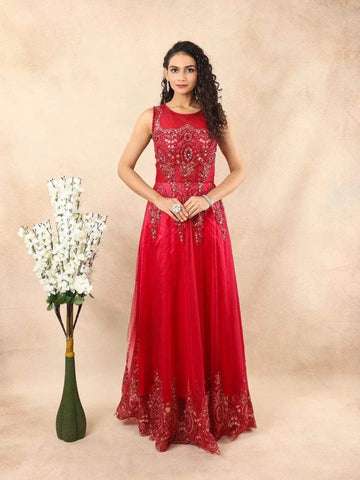
Pastels dominate. Blush and dusty pink, lavender, pastel green, ivory and coral and peach all read as celebratory without competing with what you will wear to the wedding. See the full pastel gowns range.
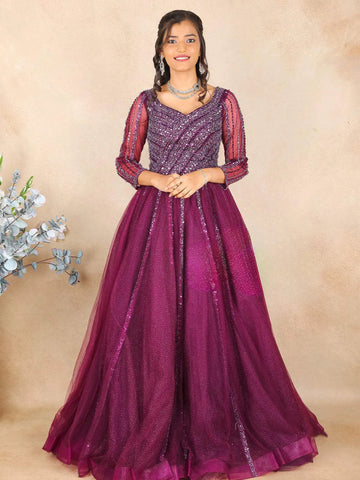
Jewel tones suit evening ceremonies. Deep burgundy, plum and purple, teal green, royal and navy blue and black hold saturation under artificial light.
Metallics and neutrals have become the modern default for urban ceremonies. Champagne beige, silver ash grey and grey, beige and cream shades photograph cleanly and shift under moving light.
Red and gold remain available if the family expects traditional colour, though most brides now save these for the wedding itself.
Gowns for the Bride and for Guests
The bride usually chooses something more structured and more embellished, in a silhouette that photographs as the focal point of the ceremony.
Guests and family should stay a step lighter. Softer fabrics, simpler drapes and minimal embellishment read as festive without pulling attention. Colour matters more than embroidery here: avoid whatever the bride is wearing if you know it, and avoid heavy gold if the ceremony leans traditional.
For guests, party wear gowns, fancy gowns and cocktail gowns all work for a ring ceremony, often at a lower price point than the bridal pieces.
Gowns for Engagement by Budget
This collection runs from ₹3,950 to ₹88,250.
Between ₹3,950 and ₹6,000 sit the pleated net and shimmer A-lines, including the bow-detail and glitter-embellished pieces. These are the most practical for guests and for brides who plan to spend the larger budget on the wedding outfit. See gowns below ₹10,000 for the wider range.
From ₹8,000 to ₹20,000 the construction becomes more structured, with corset bodices, holographic fabrics and denser sequin and kartana work. Browse ₹10,000 to ₹20,000 for comparable pieces.
Above ₹30,000 are the most embellished gowns with fuller silhouettes. See ₹30,000 to ₹40,000, ₹40,000 to ₹50,000 and ₹50,000 and above.
Styling an Engagement Gown
Jewellery. The ring is the point of the ceremony, so keep the hands clear. A statement earring or a choker, not both. Corset and off-shoulder bodices carry a necklace; high or embellished necklines are better with earrings alone.
Hair. Pulled back or half-up keeps the neckline and shoulder detail visible, and stays neat through the photographs that follow the ring exchange.
Footwear. Comfortable heels, and take them to the fitting since hem length is cut to heel height. You will be standing for most of the ceremony.
Makeup. Softer than wedding-day makeup. Engagement photographs are usually closer-range and less heavily lit, and heavy definition reads harder than it looks in the mirror.
Caring for an Engagement Gown
Steam rather than iron before the event, and do it close to the date rather than weeks ahead. Shimmer and holographic fabrics are particularly heat-sensitive.
During the ceremony, watch for snagging. Sharp jewellery, clutch clasps and chair backs all catch on net and sequin work.
Afterwards, dry clean promptly rather than storing first. Store in a breathable garment bag away from direct light, hung if light and folded flat if heavily embellished.
Buying a Gown for Engagement Online
Engagement gowns are among the easier pieces to buy online, since the silhouette does most of the work and there is no draping to judge.
Check the stated measurements rather than the size label, confirm whether a dupatta is included, and check the alteration allowance at the waist and hem. Look for close-up images of the embellishment, since bead and sequin density is hard to judge from a full-length photograph.
Allow four to six weeks before the ceremony for a ready-to-wear gown, which leaves room for one alteration. Custom pieces need longer.
Explore the full range above, or browse bridal gowns for the wedding itself, reception gowns for the evening, and all gowns for the complete collection.
Frequently Asked Questions About Gowns for Engagement
1. What is an engagement gown?
An engagement gown is a formal floor-length or ankle-length dress worn to a ring ceremony. It is typically lighter and less traditional than wedding wear, with more freedom in colour and silhouette, since the engagement carries no ritual dress convention.
2. Which gown is best for an engagement ceremony?
A-line and corset silhouettes are the most practical, since both allow sitting and movement through a ceremony that involves standing, greeting and photographs. Ball gowns suit grand evening venues; lighter pleated and net styles suit daytime and home ceremonies.
3. How much does an engagement gown cost?
Gowns in this collection range from ₹3,950 to ₹88,250. Pleated net and shimmer A-lines sit between ₹3,950 and ₹6,000, corset and holographic styles between ₹8,000 and ₹20,000, and the most embellished pieces above ₹30,000.
4. What colour gown should I wear for my engagement?
There is no convention, which is the appeal. Pastels like blush, lavender and ivory dominate daytime ceremonies. Jewel tones such as burgundy, teal and navy suit evenings. Metallics and neutrals photograph cleanly. Most brides now save red and gold for the wedding.
5. Is an engagement gown different from a wedding or reception outfit?
Yes. Wedding outfits are heavier and stay within traditional colours. Engagement gowns allow pastels, modern silhouettes and lighter construction, since the ceremony is shorter and less formal and you will be moving among guests throughout.
6. Which fabric is best for an engagement gown?
Net and tulle are the lightest and most comfortable for a long ceremony. Satin and raw silk suit structured silhouettes and photograph richly. Shimmer and holographic fabrics are built for evening ceremonies specifically.
7. What should guests wear to an engagement?
Something a step lighter than the bride. Softer fabrics, simpler drapes and minimal embellishment. Avoid heavy gold if the ceremony leans traditional, and avoid whatever the bride is wearing if you know the colour.
8. How early should I buy my engagement gown?
Four to six weeks for a ready-to-wear gown, which leaves time for one alteration. Custom pieces need eight weeks or more. Starting earlier also means the size and colour you want are still in stock.
9. Which engagement gown silhouette suits my body type?
A-line is the most universally flattering and the safest starting point. Mermaid and fitted cuts accentuate the waist and hips but restrict sitting. Corset bodices define the waist on any frame. Ball gowns add volume below the waist, which balances a broader shoulder line.
10. Can an engagement gown be altered?
Yes, at the bodice, waist and hem, subject to seam allowance and where the embellishment sits. Corset and boned bodices are harder to adjust than loose ones. Take your shoes to the fitting, since heel height sets the hem.
11. Can I wear my engagement gown again?
Yes, and this is one of its advantages over bridal wear. Lighter engagement gowns restyle easily for cocktail evenings, formal dinners and other weddings with a change of jewellery and shoes.
12. Do engagement gowns come with a dupatta?
Some do, particularly the more traditional net and embroidered pieces. Corset, shimmer and Indo-Western styles are usually sold without. The product description states which applies.
13. What jewellery works with an engagement gown?
Keep the hands clear, since the ring is the focus. A statement earring or a choker rather than both. Corset and off-shoulder bodices carry a necklace; high or embellished necklines are better without one.
14. Which gown works for a daytime engagement?
Lighter net, georgette or chiffon in pastel shades. Daylight flattens shimmer and heavy sequin work, which is built for artificial lighting, and pastels photograph better outdoors than deep jewel tones.
15. Is it safe to buy an engagement gown online?
Yes, when the actual measurements are stated rather than only the size label, and the alteration allowance is clear. Look for close-up images of the embellishment, confirm whether the gown is lined, and allow time for one fitting after delivery.





 Add to Cart