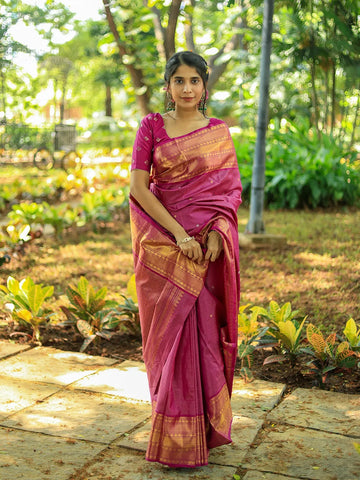
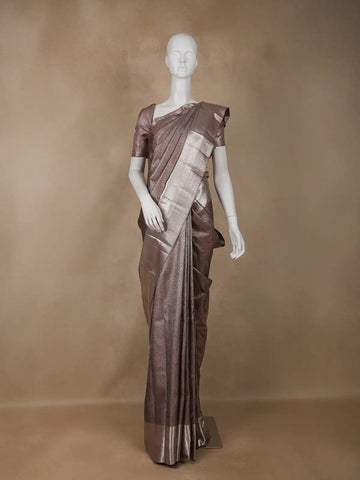
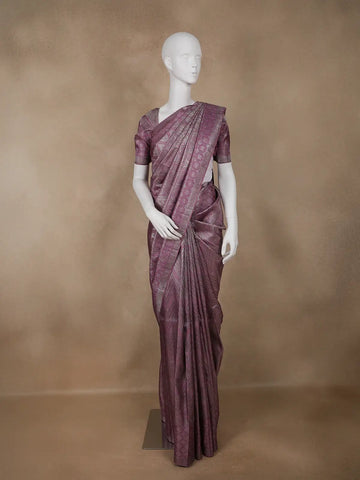
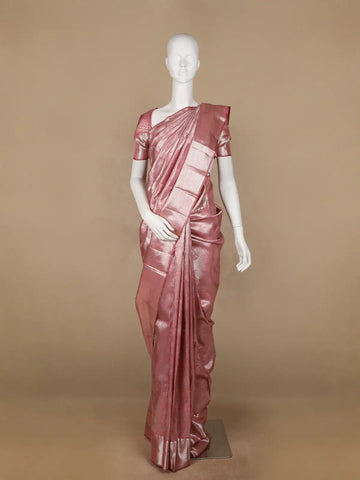
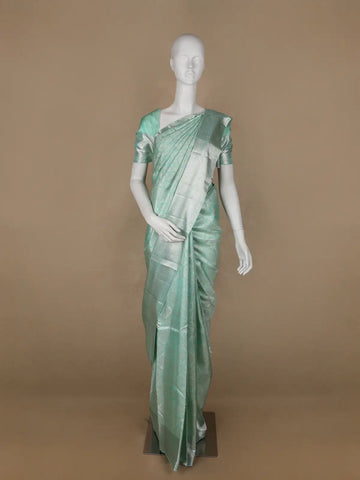
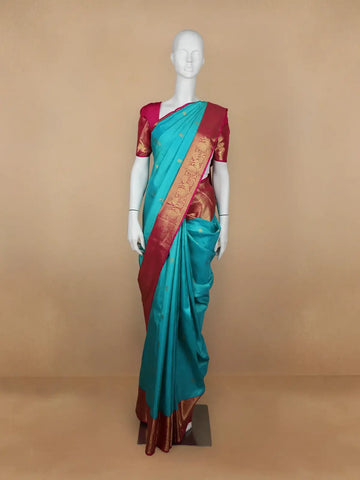
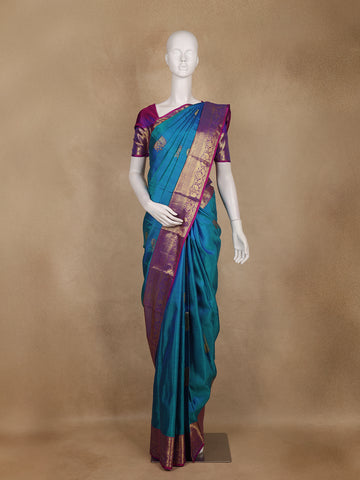
Not All Heavy Sarees Feel Heavy
Most brides remember the first time they lifted a heavy bridal saree. The instinctive reaction is often awe, followed closely by hesitation. Heavy bridal sarees carry presence, tradition, and unmistakable grandeur. Yet what many brides discover later is that weight alone does not define how a saree feels once worn.
A heavy saree can either feel grounding and secure or overwhelming and restrictive. The difference lies not in how ornate it looks on a hanger, but in how thoughtfully it has been constructed. Brides often assume discomfort is inevitable when choosing a heavy bridal saree, but that assumption overlooks the role of balance, structure, and craftsmanship.
A saree that is heavy for the right reasons settles into the body as the day progresses. It holds its shape, supports movement, and feels composed rather than demanding. When chosen well, a heavy bridal saree does not distract a bride from her wedding day. Instead, it becomes part of her confidence, allowing her to remain present through ceremonies, conversations, and photographs without constant adjustments.
Understanding this difference is where choosing a heavy bridal saree becomes less intimidating and far more intentional.
Comfort Isn’t About Weight, It’s About Balance
The most comfortable heavy bridal sarees are rarely the lightest. Comfort is created through balance rather than reduction.
A well-balanced saree distributes embellishment evenly across the fabric. Borders, pallus, and pleats work together instead of competing for attention or weight. When one area is disproportionately heavy, the saree begins to pull, shift, or strain the shoulder and waist. This is when discomfort sets in, not because the saree is heavy, but because it is uneven.
Balanced heavy sarees sit closer to the body. They feel stable during movement and secure during long periods of sitting or standing. Brides often describe this feeling as the saree “settling” rather than weighing them down.
Fabric strength also plays a critical role. A saree may look richly embellished, but without a strong base weave, the weight becomes difficult to manage. Strong silk foundations support intricate work without sagging or creasing excessively, allowing the saree to retain its elegance throughout the day.
True comfort comes from how intelligently the saree has been designed to carry its own beauty.
Embellishment Density Explained
Not all heavy bridal sarees are heavy in the same way. Understanding embellishment density helps brides make informed choices rather than relying purely on visual appeal.
Some sarees feature continuous dense work, where embroidery, zari, or embellishments cover large sections of the fabric. These sarees create a rich, uninterrupted visual impact and are often chosen for their regal presence. However, they require excellent structural support to remain comfortable over long hours.
Other sarees rely on layered detailing. Here, the richness comes from thoughtful placement rather than constant density. Motifs may appear heavier along borders and pallus, while the body remains comparatively fluid. This allows for easier movement without sacrificing visual depth.
Zari, stones, beads, and embroidery all behave differently. Zari adds weight but also stiffness. Stones and beads increase density and require secure anchoring. Threadwork adds texture without excessive weight but demands precision to maintain longevity.
The key is not avoiding embellishment, but understanding how it interacts with the fabric underneath. A heavy bridal saree that respects this relationship will hold its form beautifully while remaining wearable.
When Heavy Sarees Are the Right Choice
Heavy bridal sarees are chosen for moments that call for visual significance. They are particularly suited for ceremonies where tradition, symbolism, and formality take centre stage.
When the wedding involves extended rituals, elaborate jewellery, and a setting rooted in heritage, a heavy saree anchors the entire look. It creates harmony between attire, jewellery, and occasion. In such moments, a lighter saree may feel visually incomplete.
Heavy sarees are also ideal when the bridal look is intended to be timeless rather than trend-driven. Their rich photographs beautifully and carry emotional weight that extends beyond the wedding day itself.
That said, heavy does not mean compulsory. The right choice depends on how the bride wants to experience her day. When the wedding calls for presence and permanence, a heavy bridal saree often feels not just appropriate, but deeply meaningful.
How to Stay Comfortable in a Heavy Bridal Saree
Comfort in a heavy bridal saree begins long before the wedding day.
Proper draping is essential. Pleats should be secured in a way that distributes weight evenly around the waist rather than concentrating it in one area. The pallu must be anchored thoughtfully so it does not pull against the shoulder or neckline.
Support matters more than tightness. Over-pinning creates stiffness and restricts movement. Strategic anchoring allows the saree to move naturally while remaining secure.
Trial draping is often overlooked, yet it reveals how the saree behaves after extended wear. Sitting, standing, and walking during trials helps identify pressure points early. Adjustments made at this stage can significantly improve comfort on the actual day.
Footwear also influences how a heavy saree feels. Stable heels or wedges provide better posture support, reducing strain on the body over time.
A heavy saree does not need to feel restrictive. When worn with preparation and awareness, it can feel surprisingly manageable, even across long ceremonies.
Structural Blouse & Draping Support
The blouse carries more responsibility than many brides realise. A well-constructed blouse can transform the experience of wearing a heavy bridal saree.
Shoulder reinforcement, neckline depth, and sleeve structure all affect how weight is distributed. A blouse that fits well supports the saree naturally, preventing strain on the shoulders and back.
Inner construction matters more than surface embellishment. Secure seams, firm linings, and proper fitting ensure that the saree rests comfortably without slipping or pulling.
Blouse design should complement the saree rather than compete with it. When the saree is heavily detailed, a structurally strong yet visually balanced blouse maintains elegance. When the saree is simpler in form but rich in texture, the blouse can carry more design interest.
Ultimately, the blouse should feel like a foundation, not an afterthought.
Protecting the Work: Care Rules for Heavy Sarees
Heavy bridal sarees are crafted to last, but they require mindful care to preserve their beauty.
Dry cleaning is always recommended, especially for sarees with dense embroidery or zari. Gentle handling during cleaning helps maintain colour, texture, and structural integrity.
Storage plays a crucial role in longevity. The saree should be folded carefully to avoid stressing the same areas repeatedly. Wrapping it in a breathable fabric allows air circulation while protecting it from dust and moisture. Plastic covers should be avoided, as they trap humidity and can damage delicate work over time.
Occasional refolding prevents permanent creases and reduces strain on embellished sections. When airing the saree, indirect light is preferable, as prolonged exposure to sunlight can dull colours and weaken fibres.
With the right care, a heavy bridal saree remains vibrant, wearable, and meaningful for years to come.
Choosing a Heavy Bridal Saree Without Regret
A wedding saree is remembered long after the ceremony ends. Brides often recall how they felt in their saree more clearly than how it looked in photographs.
Choosing a heavy bridal saree without regret comes down to alignment. Alignment between the saree and the wedding day, between beauty and comfort, and between tradition and personal ease.
When the saree supports the bride rather than demanding attention, it allows her to move through her day with calm confidence. That sense of ease becomes part of the memory itself.
The best heavy bridal sarees are those that feel intentional, not overwhelming.
FAQs on Heavy Bridal Saree:
1. Are heavy bridal sarees customizable?
Yes, there are customization options where you can select the fabric, color, embroidery, and blouse designs to create the best heavy bridal saree that suits your preferences perfectly.
2. What accessories go best with heavy bridal sarees?
Gold or diamond jewelry, jhumkas, and waist belts pair beautifully with heavy bridal sarees. Choose accessories that complement the saree’s color and design.
3. What are the best colors for heavy bridal sarees?
The most loved colors for heavy bridal sarees include pink, red, maroon, green, gold, blue, and purple. Each color carries its significance, with red symbolizing love, green representing harmony, and gold embodying luxury and opulence.
4. What makes heavy bridal sarees special?
Heavy bridal sarees are special because they combine rich fabrics, intricate embroidery, and traditional artistry. They are designed to make brides look elegant and regal on their special day, often featuring detailed zari work, sequins, and beadwork for a luxurious finish.
5. Are heavy bridal sarees suitable for all occasions?
Yes, heavy bridal sarees can be worn for other occasions like festivals, family functions, or traditional celebrations. Pair them with lighter accessories to create a balanced yet glamorous look.
6. Do heavy bridal sarees become uncomfortable over time?
They can if the weight is unevenly distributed. Well-balanced sarees with strong fabric foundations remain comfortable even after long hours.
7. Can a heavy saree still allow easy movement?
Yes. Proper draping, thoughtful embellishment placement, and structural support make movement manageable.
8. Is embellishment more important than fabric strength?
No. Fabric strength determines how well embellishment is supported and how the saree behaves during wear.
9. Can heavy bridal sarees be worn again?
Many heavy sarees are reworn for anniversaries, family weddings, or formal occasions with slight styling changes.
10. How early should fittings and trials be done?Early trials allow time for blouse construction, draping adjustments, and comfort testing, reducing last-minute stress.





 Add to Cart